Alfa Heating Supply
Online shop · Laurel, United States · alfaheating.com
Unclaimed · Not verified by owner
Looking for efficient heating solutions and quality HVAC products? Explore Alfa Heating’s selection of reliable heating equipment and home heating and cooling systems today!
The facts
- Country
- United States
- Opening hours
- Prefer to call? You can reach us during business hours (Mon–Fri, 9am–5pm EST).Details
- Phone
- 1-833-328-6888
- Payment
- iDEAL
- Languages
- English
- Ships to
- Worldwide (35 countries)
- Shipping information
- Shipping page
- Free shipping
- from $90
What they sell
Web shop on Shopify: 228 products, $16.99–$1,083
Show 18 more categories
 6-Loop Hydronic Heating Manifold with 24V Electric Thermal Actuators$395.94In stock
 5-Loop Hydronic Heating Manifold with 24V Electric Thermal Actuators$346.95In stock
 4-Loop Hydronic Heating Manifold with 24V Electric Thermal Actuators$299.94In stock
 3-Loop Hydronic Heating Manifold with 24V Electric Thermal Actuators$249.99In stock
 2-Loop Radiant Heating Manifold with 24V Electric Thermal Actuators$184.99In stock
 Copper-Aluminum Radiator | Wall-Mounted Heating Radiator$168.99–$329.99In stock
 AB 1"x 1" PEX Ball Valve, Full Port, Lead-Free Brass, UPC Certified, with Stainless Steel Cinch Crimp Rings$39.99–$75.50In stock
 AB 1/2" PEX Full Port Brass Ball Valve with Stainless Steel Cinch Rings (5-Pack), Lead-Free, UPC Certified$23.98In stock
 WiseWater 1/2" PEX x 1/2" FNPT Swivel Adapter Kit, Lead-Free DZR Brass, NSF/ANSI 61 Certified, 12 Pack$33.99In stock
 WiseWater 3/8" PEX-B x 1/2" Female NPT Swivel Adapter Kit – Brass PEX Fittings with Crimp Rings & Clamps (5 Pack)$21.99In stock
 WiseWater 5 Pack 1/2" PEX x 7/8" FNPT Swivel Adapter Kit, DZR Brass PEX Fittings with Clamps and Crimp Rings, Lead-Free Water Plumbing Connectors$19.99In stock
 WiseWater 1/2" x 1/2" FNPT Swivel Elbow PEX Adapter Kit, Brass DZR, NSF/ANSI 61 Certified, with Stainless Steel Clamps and Copper Crimp Rings, 5 Pack$17.99In stock
12 of 228 products, read 23 h ago
12 of 228 products, prices $16.99–$1,083, as published by the shop (read from the shop 23 h ago; the shop last changed its products 27 November 2026; last change seen here 23 h ago). Prices and stock change; the shop’s website has the current ones.
Opening hours
| Prefer to call? You can reach us during business hours (Mon–Fri, 9am–5pm EST). |
Hours as written on the website.
About
Product news, tips, and heating solutions from Alfa Heating Supply. Engineered for performance across a wide range of applications. Engineered for performance across a wide range of applications.
Frequently asked questions
What Is a Brazed Plate Heat Exchanger?
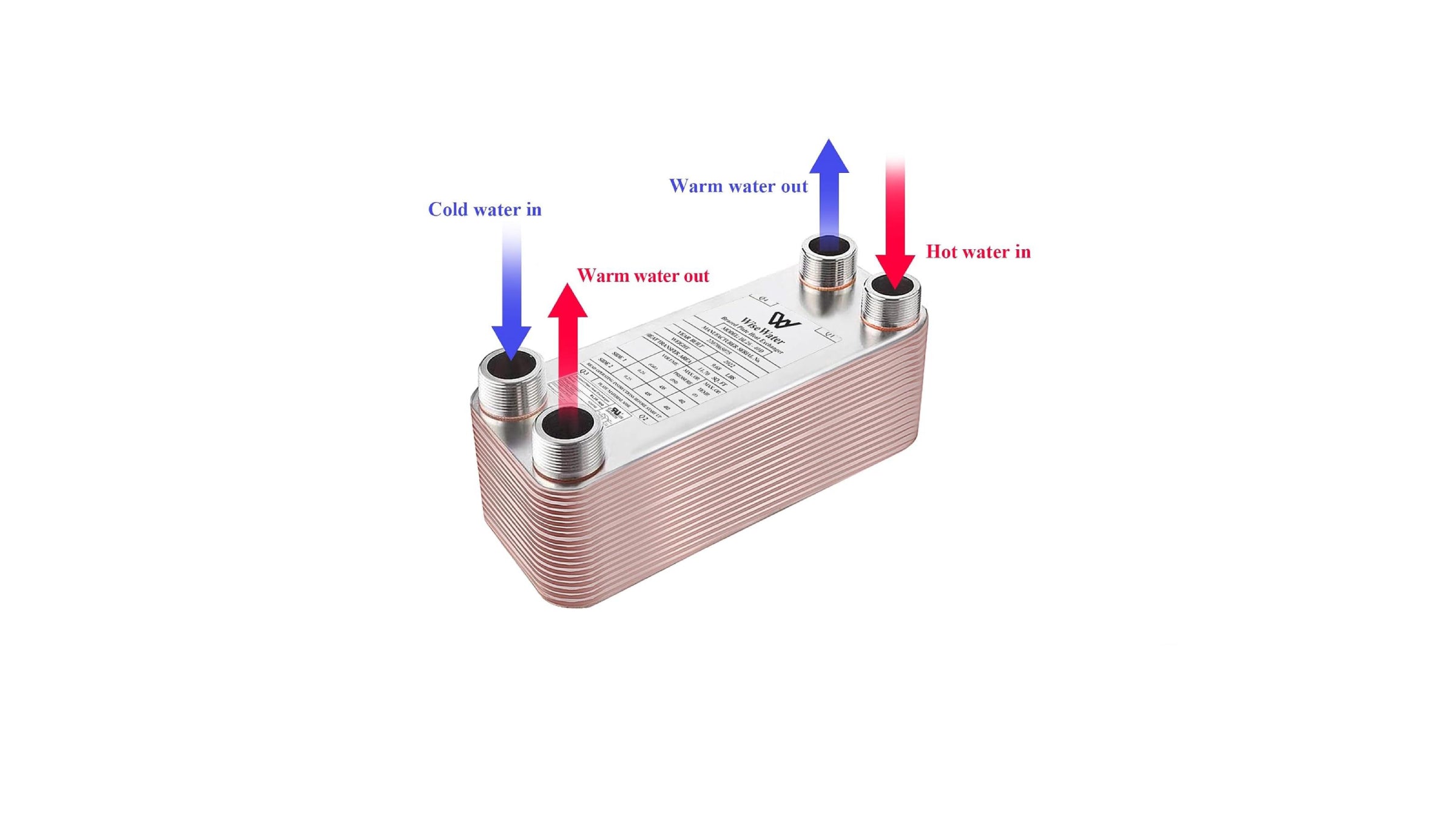
A Brazed Plate Heat Exchanger (BPHE) is a compact and highly efficient heat transfer device made from multiple corrugated stainless steel plates that are permanently bonded together using a brazing material such as copper or nickel. Unlike traditional gasketed heat exchangers, BPHEs do not use rubber seals. This gasket-free design provides enhanced durability, allowing the unit to operate reliably under high pressure and high temperature conditions. The corrugated plate structure creates turbulent flow between channels, significantly improving heat transfer efficiency while maintaining a…
What Are the Four Types of Heat Exchangers?
The four main types of heat exchangers, based on their construction, are shell and tube, plate, double pipe, and finned tube heat exchangers. These systems transfer heat between fluids (liquids or gases) through a solid surface, ensuring efficient thermal exchange without mixing the fluids.Shell and Tube Heat ExchangerThis type consists of a bundle of tubes enclosed within a cylindrical shell. One fluid flows through the tubes, while the other circulates around them inside the shell. It is highly durable and commonly used in large-scale industrial applications such as power generation and…
What Is the Main Advantage of Plate Heat Exchangers?
The primary advantage of plate heat exchangers is their exceptionally high heat transfer efficiency relative to their size. By using multiple thin plates, they provide a much larger heat transfer surface area per unit volume compared to traditional designs such as shell and tube heat exchangers.This compact and efficient structure allows for improved thermal performance, reduced energy consumption, and space-saving installation. As a result, plate heat exchangers are widely used in HVAC systems, water heating, heat pumps, refrigeration, and various industrial applications, particularly in…
Why does it take so long for hot water to reach my bathroom?
When a bathroom is far from the water heater, hot water may take longer to arrive because the water sitting in the pipes must be cleared first. A hot water circulation system may help reduce waiting time by moving hot water through the plumbing loop. The right solution depends on your home's pipe layout, plumbing configuration, and existing equipment.
How can I reduce moisture and improve ventilation in my bathroom?
Poor ventilation can allow shower moisture to linger, contributing to condensation, musty odors, and potential mold growth. Start by checking whether your existing exhaust fan is operating properly and whether it vents outdoors. Depending on your bathroom's size, moisture levels, and existing ductwork, you may need to improve exhaust capacity or address airflow restrictions.
Why does my bathroom feel cold even when the rest of my home is warm?
Bathrooms can feel colder because of tile floors, exterior walls, windows, and insufficient heat output. A suitable heating solution may help maintain a more comfortable temperature. To choose the right equipment, consider the bathroom's dimensions, insulation, window area, desired temperature, and available heating system.
What heating solution is right for my bathroom?
The best option depends on your available heat source, installation space, heating requirements, and whether you want to warm the room, the floor, or towels. Hydronic radiators and other compatible heating equipment may be suitable for certain systems. Compare the required heat output with the product's rated capacity under your actual operating conditions before selecting a solution.
Can I improve my bathroom's hot water circulation, ventilation, or heating without remodeling the entire bathroom?
In many cases, an existing system can be improved without a complete bathroom renovation. However, the scope of work depends on the current plumbing, electrical connections, ventilation ducts, heating system, and available installation space. Have a qualified professional assess the existing setup and confirm compatibility before making changes.
How do I determine the right size heating equipment for my bathroom?
Consider room dimensions, insulation, window area, target temperature, and heat-source operating conditions. Compare the calculated heat requirement with the product's rated output at your actual operating temperatures. A qualified professional can help confirm sizing and compatibility.
What information should I have before choosing bathroom heating or circulation equipment?
Gather the bathroom dimensions, plumbing and heating system details, available installation space, and relevant operating temperatures and flow rates. Equipment model numbers and installation photos can also help check compatibility. For complex installations, consult a qualified contractor before purchasing.
What are the key requirements for bathroom heating systems?
Bathroom heating systems should provide a stable indoor temperature, a continuous hot water supply, and energy-efficient operation. Compact installation, low noise levels, and safe operation are also important, especially in apartments, hotels, and residential buildings where space is limited.
What heating solutions are suitable for bathrooms?
Common bathroom heating solutions include domestic hot water systems, hydronic radiant floor heating, and fan coil unit (FCU) heating systems. Domestic hot water systems ensure reliable water availability for showers and sinks, while floor heating provides comfortable surface temperatures. FCU systems offer flexible indoor temperature control and space-efficient installation.
Why are compact and quiet heating systems important in bathrooms?
Bathrooms often have limited installation space and are located close to bedrooms or other occupied areas. Compact heating systems allow flexible installation in bathrooms, ceiling voids, or nearby utility rooms without taking up valuable space. Quiet operation helps maintain indoor comfort, while accessible system configurations can simplify maintenance.
What are the best heating solutions for living rooms?
Fan coil unit (FCU) heating systems and underfloor heating systems are commonly used in living rooms. FCU systems provide fast, responsive heating and flexible temperature control, while underfloor heating ensures even heat distribution and comfortable indoor conditions. Both solutions are suitable for residential homes, apartments, hotels, and serviced residences.
What are the main benefits of underfloor heating in living rooms?
Underfloor heating systems provide consistent and uniform heat distribution, improving thermal comfort throughout the living space. They also eliminate the need for visible radiators, allowing greater flexibility in interior design. These systems are particularly suitable for modern homes and apartments where energy efficiency, quiet operation, and space-saving installation are important.
Why is quiet and energy-efficient heating important in living rooms?
Living rooms are occupied for extended periods, making quiet operation and energy efficiency essential for daily comfort. Low-noise heating systems help maintain a peaceful environment during relaxation, entertainment, and evening activities. Energy-efficient heating solutions also support consistent indoor temperatures while helping reduce long-term energy consumption and operating costs.
What are the best heating solutions for bedrooms?
Fan coil unit (FCU) heating systems and hydronic floor heating are commonly used in bedrooms. FCU systems provide fast and flexible temperature control through hot water circulation, while floor heating delivers silent, even radiant heat. Both solutions support consistent indoor comfort and are suitable for residential homes, apartments, hotels, and serviced residences.
Why is hydronic floor heating a good choice for bedrooms?
Hydronic floor heating provides quiet, uniform heat distribution, making it ideal for bedrooms where uninterrupted sleep and thermal comfort are priorities. The system uses embedded pipes to circulate heated water, eliminating the need for visible heating equipment. Its low-temperature operation also supports energy efficiency and stable indoor temperatures throughout the night.
What are the key requirements for an efficient bedroom heating system?
An efficient bedroom heating system should maintain stable indoor temperatures, operate quietly, and provide reliable heating during extended periods of use. Energy efficiency, compact installation, and safe operation are also essential. Systems with accessible components and minimal maintenance requirements help ensure long-term performance without disrupting daily comfort.
Features
Read from alfaheating.com. Last read 23 h ago. 8 of 11 key facts have a value; missing: location or service area, social profiles, booking, order, menu or pricing link. Where these facts come from