From Field and Flower
Online shop · STONEY STRET, United Kingdom · fromfieldandflower.co.uk
Unclaimed · Not verified by owner
From Field and Flower brings fantastic honey, honey cremes, rice and flour products to the London. We can be found at the Borough Market.

The facts
- Address
- THREE CROWN SQUARE, STONEY STRET, SE1 1TL. Map
- Country
- United Kingdom
- Opening hours
- Closed now · opens Tue 10:00All opening hours
- Founded
- 2005
- Languages
- English
- Shipping information
- Shipping page
What they sell
Web shop on WooCommerce: 28 products, £9–£14
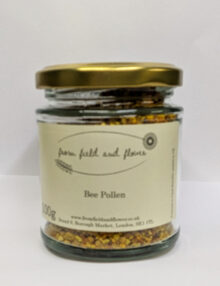 Pollen£12In stock
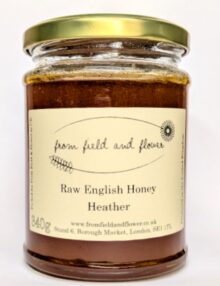 Raw Heather Honey£13In stock
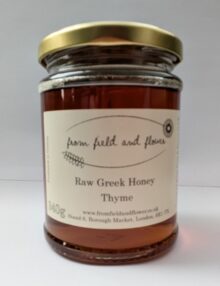 Raw Thyme Honey£12In stock
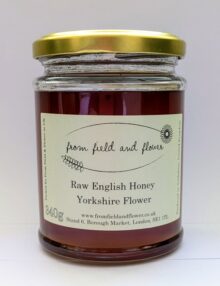 Yorkshire Flower Honey£12In stock
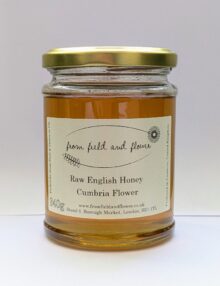 Raw Cumbria Flower Honey£12In stock
 Raw Summer Savory Honey – ‘Santoreggia’£10In stock
 Raw Eucalyptus Honey£10In stock
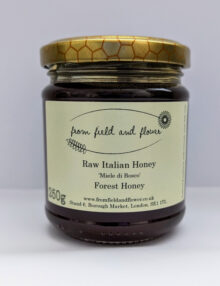 Raw Forest Honey – ‘Miele di Bosco’£10In stock
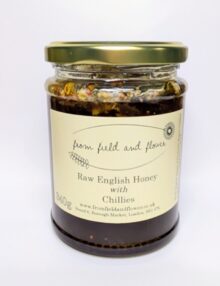 Raw English Honey with Chillies£14In stock
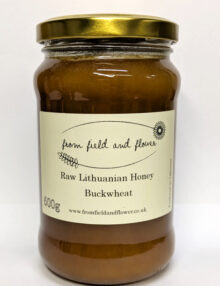 Raw Buckwheat Honey£14In stock
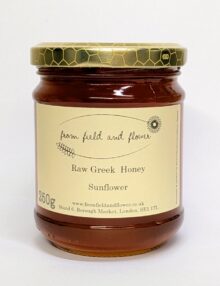 Raw Sunflower Honey£11In stock
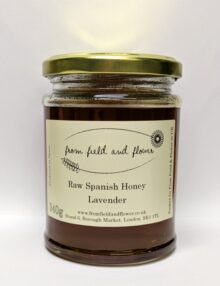 Raw Lavender Honey£12In stock
12 of 28 products, read 6 days ago
12 of 28 products, prices £9–£14, as published by the shop (read from the shop 6 days ago; the shop last changed its products 21 November 2026; last change seen here 6 days ago). Prices and stock change; the shop’s website has the current ones.
Opening hours
Closed now · opens Tue 10:00
| MONDAY: CLOSED | |
| TUESDAY – FRIDAY: 10AM – 5PM | |
| SATURDAY: 9AM – 5PM | |
| SUNDAY: 10AM – 4PM |
Times in the business’s local time (Europe/London). Hours as written on the website.
About
Hello. We’re Stefano and Sam. We love food, talk about it, cook it, and eat lots of it. We’re passionate about quality products that taste delicious. One day we decided to stop talking about it and start doing it ourselves. Where to start? Well that was an easy one. Stefano’s from Piedmont Italy, and had a ready convert to the fantastic products the region produces, in me, Sam. With his insider knowledge of the best small producers in the area, we decided to start bringing interesting and tasty honey and honey cremes, as well as bee pollen and propolis to London. We started in London food markets in November 2013 and love sharing our passion for our products.
Prices
| Pollen | £12.00 |
| Raw Heather Honey | £13.00 |
| Raw Bramble Honey | £9.00 |
| Raw Thyme Honey | £12.00 |
| Raw Rosemary Honey | £12.00 |
| – Price per package | £5.55 |
| Propolis | £12.50 |
| Raw Alpine Flowers | £11.00 |
| Raw Borage Honey | £9.00 |
| Raw Buckwheat Honey | £14.00 |
| Raw Creamed Wildflower – ‘Pärlehonung’ | £14.00 |
| Raw Cumbria Flower Honey | £12.00 |
| Raw Devon Flower | £12.00 |
| Raw English Honey with Chillies | £14.00 |
| Raw Eucalyptus Honey | £10.00 |
| Raw Acacia Honey - 'Acacia' | £9 |
| Raw Acacia Honeycomb 250g | £13 |
Prices as shown on the website when it was last read; the business may have changed them since.
Frequently asked questions
Q: What are the delivery costs/options?
A: Delivery prices are calculated on the total product weight (product weight + container or packaging weight), packaging and delivery method.UK delivery:Royal Mail Tracked & Signed 48 – Maximum package weight: 2kg– Price per package: £5.55Royal Mail Tracked & Signed 24– Maximum package weight: 2kg– Price per package: £6.65Courier Delivery:– Courier delivery from £8.00 – £15.00.– Prices are calculated on checkout, based on the weight and size of order.– All orders over 2kg are dispatched via courier.– 48-hour delivery (not on weekends).International delivery:We ship to most places around the…
Q: Do you ship internationally?
A: Yes we do, with some exceptions – see below.Generally, as long as the destination country permits honey, propolis and/or pollen to enter. All international orders may be subject to fees and tariffs at customs, if applicable, these are your responsibility to pay.US orders: Unfortunately, the US Government imposed tariffs on all goods coming into the US from abroad, have caused big delays and losses of orders to date. It will require us to set up an export office to deal with only US customs requirements. This is not possible for a business of our size, so sadly we are unable to ship to the…
Q: Where does honey come from?
A: Honey is made by honey bees (not all bees make honey), and starts as pollen and nectar that they gather from flowers. Bees use enzymes that break down the pollen and nectar into a sweet liquid that becomes honey. Honey also contains vitamins, minerals, amino acids, and enzymes from the flowers the bees have been visiting.Honey has completely different flavours, colour and smell, dependent on the type of plants the nectar the bees collect comes from.
Q: Why are honeys different colours – some light, some dark?
A: A honey’s colour is determined by the flowers and plants the bees have foraged pollen and nectar from. Some honeys are very light in colour, or almost transparent, this usually indicates a lighter, more delicate flavour. The darker the colour of honey, with a few exceptions, the stronger in overall flavour the honey is.
Q: What is crystallised or set honey?
A: All honey when it’s first made by bees is in a liquid, or ‘runny’ form. When a honey goes opaque, with a thick granular, or grainy consistency it has crystallised or ‘set’. This is a completely natural process of the naturally occurring sugars in the honey solidifying over time. Some nectar and pollen sources have more naturally occurring sugars, and thus will crystallise quicker. Honey also crystallises faster in the cold. Some people prefer crystallised honey to runny, and vice versa. Crystallised honey is great spread on toast, in porridge, or dissolved into warm drinks.
Q: What does ‘raw’ mean?
A: Raw is synonymous with unpasteurised, or not over heated honey. It indicates that the honey has not been heated to high heats or to pasteurization point. Raw or unpasteurised honey retains its natural antiseptic, antibacterial properties, as well as the naturally occurring vitamins, minerals, and enzymes. In essence, our honeys are extracted from the hive, and then lightly filtered before being bottled. Our beekeepers lightly filter the honey to remove hive debris, unprocessed pollens, and in some case bee body parts before it’s bottled.
Q: Where does your honey come from?
A: We work with beekeepers from both the UK and around the world. We source our honeys from people who are passionate about their bees and who never over harvest honey from the hives. If there’s been a poor season and the bees need to keep all of their honey for winter, then we simply don’t get the honey. Our beekeepers are always small, independent producers, often family businesses for generations, and who never overheat or pasteurise the honey. The bees’ welfare and happiness are their priority, and that’s how we like it!
Q: How do I store honey, pollen and propolis?
A: Keep at an ambient temperature, out of direct sunlight. A kitchen cupboard is fine. You don’t need to put honey in the fridge. You won’t harm the honey if you do, but it will crystallise/set much faster there.
Q: Are any pesticides used during production?
A: Most of our honeys come from the wilderness or uncultivated land, so there are no pesticides. The use of bee-harming neonicotinoid pesticides are banned in the EU, along with genetically modified crops.
Q: Does honey ‘go off’ or expire?
A: It doesn’t go bad if it’s stored correctly. Over time, honey can darken in colour/become opaque where it was once almost transparent, it can also change in texture from smooth and runny to thick and crystallised, but this does not mean the honey is ‘off’.Honey doesn’t go off because its naturally high levels of sugar and low levels of moisture prevent bacteria from growing. Bees also add an enzyme called glucose oxidase to the honey. This creates hydrogen peroxide which further helps to preserve it and prevent spoilage.
Q: How are you ethical /sustainable?
A: We only work with small, independent beekeepers, who are committed to the welfare of their bees, and honey of the highest quality. They work in harmony with their bees – they don’t over harvest, and absolutely will not deprive bees of the honey they need to thrive. That means that some years, if the conditions haven’t been right for the bees to make enough extra honey for us, then we won’t get any at all. The bees will keep it as it’s a critical part of their survival over the winter months when there is no fresh pollen and nectar for them to collect.We know each of our beekeepers and…
Q: Do you keep bees yourselves?
A: Alas no, we don’t have space for any hives unfortunately – one day!
Q: How is your honey better/different from others?
A: Our honey is raw or unpasteurised, that means it retains all its natural properties and flavour. It also comes from a single source and is never blended with other honeys. Raw or unpasteurised honey is the closest thing to eating honey straight from the hive, and as such the honey retains its natural antiseptic, antibacterial properties, as well as the naturally occurring vitamins, minerals, and enzymes. In essence, our honeys are extracted from the hive, and then lightly filtered before being bottled. Our beekeepers lightly filter the honey to remove hive debris, unprocessed pollens, and…
Q: Can you get organic honey?
A: Yes, but it is difficult to do, as bees have circa 5-7 miles flight distance on their hunt for pollen and nectar and can fly in any direction. In order for honey to be classed as ‘organic’, the bees need to be only visiting flowers that have not been treated with chemicals or pesticides, or only treated with organic products. A beekeeper needs to prove that all their bees have foraged organically and are a considerable distance from common pollution sources such as roads for example. Due to the size of the UK, the way our land is used, and our population density, it’s very hard to produce…
Q: What is Royal Jelly/Propolis/Bee Bread/Pollen?
A: Bee pollen is the pollen the bees collect from the flowers and then bring back to the hive. Our bee pollen is gathered only when the hives are full with honey. A beekeeper will put a small grate over the entrance to the hive, which knocks off the excess pollen on the bees’ bodies as they go through (they retain the pollen in their leg hampers, which will they’ll make into honey). The excess pollen falls into a box beneath the hive entrance, is collected and then gently dried. It has a dry texture which dissolves easily, and has a strong floral flavour, that’s gently sweet. Bee pollen is…
Read from fromfieldandflower.co.uk. Last read 6 days ago. 10 of 11 key facts have a value; missing: features. Where these facts come from