
Thirty years of asking one question: what if your illness is an undiagnosed trauma? Emotional Memory Images, Split-Second Unlearning and the MindReset app — the science, the stories and the method.
The facts
- Country
- United Kingdom
- Payment
- Bank transfer
- Languages
- English
What they sell
Web shop on WooCommerce: 122 products, £10–£5,000
 The Patterns of Dis-ease — Albir, Spain£3,000In stock
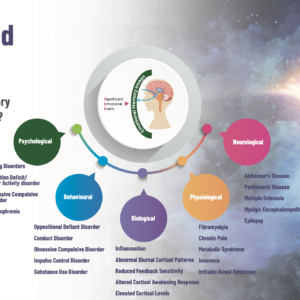 Certified Practitioner of Split-Second Unlearning™ — Albir, Spain£3,000In stock
 The Hudson Method: It’s About Time — Antwerp 2027£3,000In stock
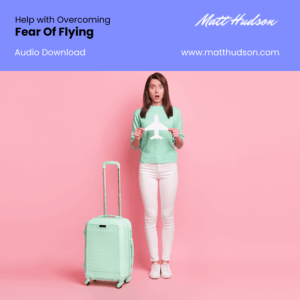 Fear of Flying£29.99In stock
 Family Rules Okay (eBook – PDF Download)£10In stock
 MindReset£5,000In stock
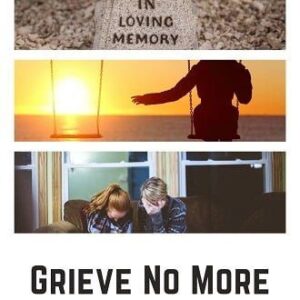 Grieve No More£77In stock
 Chronic No More£197In stock
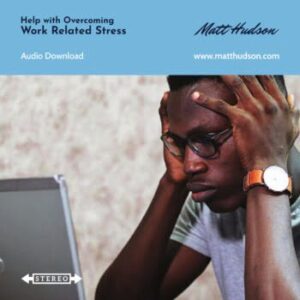 Work Related Stress£29.99In stock
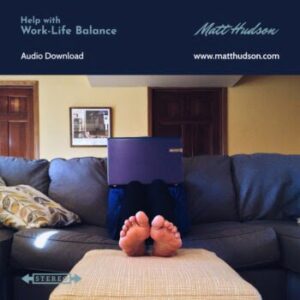 Work-Life Balance£29.99In stock
 The Career Coaching Self-Hypnosis Package£100In stock
 The Healing Self-Hypnosis Coaching Package£100In stock
12 of 122 products, read 1 h ago
12 of 122 products, prices £10–£5,000, as published by the shop (read from the shop 1 h ago; the shop last changed its products 6 November 2026; last change seen here 1 h ago). Prices and stock change; the shop’s website has the current ones.
About
Trauma begins and ends inside your mind, your body becomes a casualty of both Trauma doesn’t begin in the body — it begins in a single image the mind captures in a moment of overwhelm. And until that image changes, the body remains caught in the fallout. My life’s work has been understanding those images, how they shape our physiology, and how quickly everything transforms when they’re cleared. For more than 25 years I’ve been exploring the human mind — from neuroscience and trauma research to quantum physics and the informational field that shapes our behaviour. My journey hasn’t been academic alone; it’s been personal, raw, and often unexpected.
Prices
| Chronic Pain Self-Hypnosis Download | No Stimulus, No Pain | £29.99 |
Prices as shown on the website when it was last read; the business may have changed them since.
Frequently asked questions
What is Split-Second Unlearning and how does it work?
Split-Second Unlearning is a groundbreaking method developed by Matt Hudson to locate and clear Emotional Memory Images (EMIs)—subconscious visual imprints formed during moments of emotional overwhelm. These EMIs act as hidden triggers, influencing thoughts, feelings, and physical health. The process uses precise observation of micro-responses (such as eye flicks or breath holds) to identify the trauma signature, then interrupts its influence instantly—without needing to relive or retell the past.
How is this different from traditional therapy?
Unlike conventional talk therapy, which often involves revisiting painful memories over extended periods, Split-Second Unlearning is fast, non-invasive, and emotionally neutral. Clients don’t need to explain their trauma or even remember it consciously. The model works by accessing the body’s automatic stress response system—allowing for resolution in real time without emotional distress.
How do you find trauma if it’s undiagnosed or forgotten?
Trauma doesn’t need a conscious narrative to be active in your system. Matt Hudson’s approach tracks involuntary micro-signals—tiny shifts in breath, posture, eye movement, or tension that occur when a trauma-related EMI is triggered. These subtle cues act like breadcrumbs, leading directly to the hidden emotional imprint, even if the conscious mind has no memory of the original event.
What conditions or problems can this approach help with?
Split-Second Unlearning has been successfully used to address: Chronic stress and anxiety Panic attacks and phobias Insomnia and sleep apnea Chronic pain and fatigue Emotional reactivity and relationship issues Executive burnout and performance blocks If a subconscious memory is causing physiological stress, this approach can help clear it.
Is this model supported by research?
Yes. The Split-Second Unlearning framework is underpinned by peer-reviewed research, including published studies on EMIs, trauma, and psychophysiological health. Matt Hudson has co-authored papers in journals such as Frontiers in Psychology and Frontiers in Pain Research, offering evidence for the model’s effectiveness in areas like sleep improvement, emotional regulation, and chronic pain.
Could Undiagnosed Trauma Be Affecting You?
This questionnaire will help you understand patterns that may indicate unresolved emotional experiences held in your nervous system.
Why don’t affirmations work for me?
Because they speak to the three floors made of words, and the thing driving your reaction sits beneath them. When you say “I am safe” while your body is braced, the body’s message wins. That isn’t a failure of discipline. The tool was aimed at the wrong layer.
Is an Emotional Memory Image the same as a limiting belief?
No. A limiting belief is a sentence, such as “I’m not good enough.” The EMI is the pre-verbal image the sentence was written about. Change the sentence and the image can still fire. Clear the image and, in my experience, the sentence often has nothing left to explain.
Can I use affirmations alongside EMI work?
Yes, and the order matters. Work with the image first. Once the alarm has stopped ringing, a kind word to yourself has somewhere to land.
How do I know if I have an Emotional Memory Image?
Look for a reaction that is faster, bigger or older than the situation deserves. If a raised eyebrow can ruin your afternoon, something other than the eyebrow is being answered.
Do I need to remember what happened to me?
No. The EMI is below conscious, so it isn’t something you can recall on demand, and you don’t need to. The work is done with where the image is and what it looks like, not with the story of how it got there.
Does this replace therapy or medical care?
No. It sits alongside them. Keep the people who are already looking after you, and treat this as one more floor of the house to explore.
Read from matthudson.com. Last read 1 h ago. 8 of 11 key facts have a value; missing: location or service area, opening hours, features. Where these facts come from