National Sequoias
Online shop · Kimball, United States · nationalsequoias.com
Unclaimed · Not verified by owner

National Sequoias grows Giant Sequoia trees and saplings on a 24-acre farm in Michigan — shipped nationwide. Shop saplings, wedding favors, seed kits, and bulk wholesale orders.
The facts
- Country
- United States
- Phone
- (586) 300-3553
- Payment
- Gift card, iDEAL
- Languages
- English
- Ships to
- United States
- Delivery
- Shipped within 3 business days
- Shipping information
- Shipping page
What they sell
Web shop on Shopify: 26 products, $4.99–$449.99
 Memorial Tree$44.99In stock
 Retail Display$96In stock
 Giant Sequoia-Small sapling Gift$11.99In stock
 3 Gallon Giant Sequoia - XL Tree$59.99In stock
 Custom Designed Special Event Product$11.99In stock
 Memorial Gift Tube$11.99In stock
 Company Gift Tubes$11.99In stock
 Thank You Gift Tube$11.99In stock
 5 Pack - Small Sequoia Saplings$39.99In stock
 Mature Block of 100 Trees$449.99In stock
 Starter Block of 100 Trees$249.99In stock
 National Sequoias' Digital Gift Card$10–$100In stock
12 of 26 products, read 10 h ago
12 of 26 products, prices $4.99–$449.99, as published by the shop (read from the shop 10 h ago; the shop last changed its products 27 November 2026; last change seen here 6 days ago). Prices and stock change; the shop’s website has the current ones.
About
Every Giant Sequoia planted tells two stories: one of lasting memories and one of hope for our planet’s future. Across the country, families, schools, and plant lovers are creating living legacies by planting these remarkable trees, symbols that will grow alongside life’s most meaningful milestones. At the same time, each sequoia makes a powerful impact in the fight against climate change, capturing carbon, improving air quality, and supporting a healthier environment. Together, our community of tree planters is building a greener, more sustainable future while leaving behind memories that will last for generations.
Prices
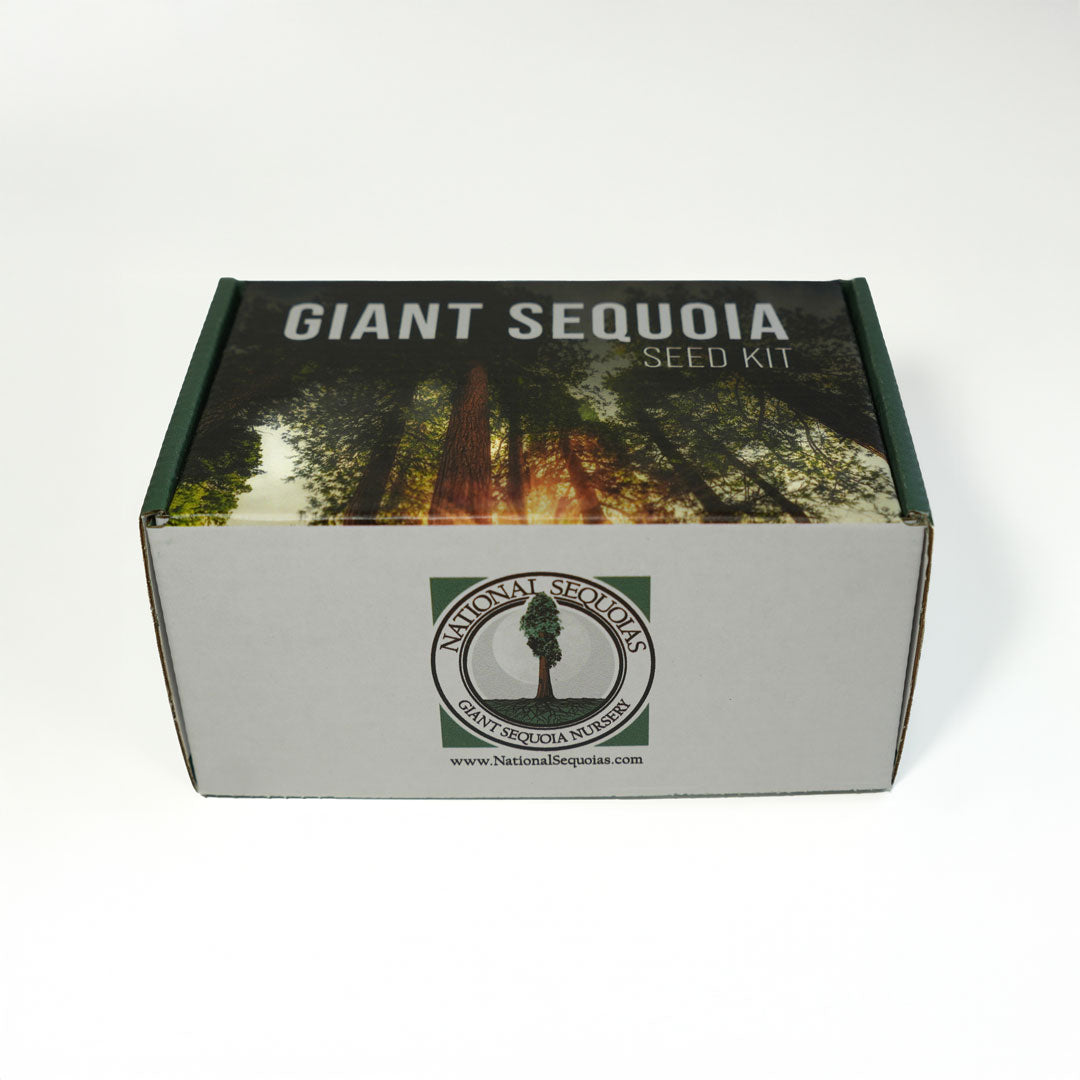
| Giant Sequoia Seed Kit - Plant Growing Kit | $19.99 |
Prices as shown on the website when it was last read; the business may have changed them since.
Frequently asked questions
What's the difference between Giant Sequoias, Coast Redwoods, and Dawn Redwoods?
All three trees belong to the redwood family, though each sits in its own distinct genus. Giant Sequoia is the world's largest tree by volume, native to California's Sierra Nevada and hardy across USDA zones 6-8. Coast Redwood is the tallest tree species on Earth but needs coastal humidity (zones 7-9). Dawn Redwood is a deciduous conifer, cold-hardy down to zone 4, and adapts well to Midwest and Northeast climates. Read the full comparison here.
Will a Giant Sequoia or Dawn Redwood grow where I live?
Both species adapt to a wide range of climates. Giant Sequoias thrive in USDA zones 6-8, which covers most of the United States, including the Northeast, Southeast, Midwest, Pacific Northwest, and Southwest. Dawn Redwoods are even more cold-hardy, thriving in zones 4-8, making them a strong choice for colder regions and gardeners with wetter soils. See the full zone breakdown and state-by-state guide here.
How do I plant and care for my new tree?
Your sapling arrives ready to pot. Plant it in a 2 to 3 gallon container with well-draining potting soil, keep the root plug level with the soil surface, and place the pot in a sunny outdoor spot. Water thoroughly, then let the soil dry slightly between waterings. Giant Sequoias prefer to dry out between waterings; Dawn Redwoods like their soil consistently moist. Full planting, fertilizing, and winter care instructions are here.
How does a Giant Sequoia impact climate change?
When you buy a sequoia sapling, you aren't just buying a tree. You're buying a natural carbon capture machine. Sequoias are some of the fastest-growing and largest trees on Earth. Over their lifetime, they can capture and store hundreds of tons of CO₂ from the atmosphere, helping fight climate change for thousands of years. The redwood family as a whole ranks among the most powerful carbon-capturing tree groups on the planet: Coast Redwoods store more carbon per acre than any other forest type on Earth. Dawn Redwoods sequester carbon rapidly thanks to their fast growth rate, even though they…
What threatens Sequoias today?
Climate change, drought, intense wildfires, and bark beetle infestations are growing concerns that will impact a tree. A topic that has been discussed in outlets such as The Guardian, The Times, and AP News.Watch this video to learn more about how climate change is impacting the Giant Sequoia in the US.
Where do Giant Sequoias grow and thrive?
They thrive in USDA zones 6-8. Please see below if one would thrive in your state. The information here is based on the USDA Zone Map.Northeast: Virginia, West Virginia, Kentucky, Indiana, Ohio, Pennsylvania, New Jersey, Connecticut, Rhode Island, Massachusetts, Delaware, Maryland, and parts of Michigan and New York.Southeast: North Carolina, South Carolina, Tennessee, Mississippi, Alabama, Georgia, Florida.North Central: Kansas, Missouri, and parts of Illinois.South Central: Louisiana, Arkansas, Oklahoma, and Texas.Northwest: Washington, Oregon, and parts of Idaho.Southwest: California…
How long does it take a Sequoia tree to grow?
Early Growth (0–10 years): Grow about 1–2 feet per year if conditions are good.Juvenile Stage (10–50 years): Growth speeds up to 2–4 feet per year.Mature Growth (50–200 years): Continue growing steadily, reaching 150–250 feet tall. Even after that, they will still continue to grow and live for many years after that.
Which one is right for you?
Our team grows Giant Sequoias and Dawn Redwoods in Michigan. Both species ship nationwide, ready to plant.
How do I plant a sequoia sapling once I order it?
Your tree is roughly 1 year old. At this stage, the sapling is too small to be planted in its permanent location. Instead, plant it in a larger container for the first year or two. Helpful tip: Before planting the tree in a pot, check the moisture level of the roots. If the tree feels dry, give it water right away. A 1–3 gallon container pot is recommended. Make sure the container has multiple drainage holes at the bottom. Use high-quality, well-draining potting soil. Fill the container with soil and plant the sapling up to the top of the plug. Ensure the plug stands upright; you do not need…
Planting a Dawn Redwood sapling?
See our care instructions for details on how to properly care for your new sapling!
What are the best practices for caring for a potted sequoia?
For the first few years, while your tree is growing in a container pot, we recommend using a slow-release fertilizer. A few that we have used are Andersons 18-6-12 or Espoma Evergreen tone 4-3-4. We do recommend a low to medium rate, follow the instructions on the label. Once the tree is ready to be planted in the ground, ensure a sufficiently large hole is dug to add well-draining, nutrient-rich soil.You want your sequoia to stop growing towards the end of the season to “harden off.” You do not want new sensitive growth to occur before the winter. This allows the new growth to get stronger…
How much water does a giant sequoia need?
Sequoias prefer to dry out slightly between waterings. Avoid keeping the soil constantly saturated. When the bottom of the container has just a little water remaining, it’s time to water again. Remember: as the pot dries, the roots grow and search for moisture.How do I avoid drought stress or drying out my sequoia tree?Mulch around newly planted trees to retain soil moisture.Deep-water weekly during dry periods.Avoid letting the soil dry out completely.Is overwatering a concern when in a pot?Yes. Overwatering, or waterlogging, the soil can cause root rot for your tree, just like other plants.…
How do I avoid drought stress or drying out my sequoia tree?
Yes. Overwatering, or waterlogging, the soil can cause root rot for your tree, just like other plants. Ensure the soil drains well and keep it lightly moist.
Is overwatering a concern when in a pot?
Yes. Overwatering, or waterlogging, the soil can cause root rot for your tree, just like other plants. Ensure the soil drains well and keep it lightly moist.
What should I do when I am ready to transplant my sequoia tree to a permanent location?
Once your tree has outgrown its pot, it’s time to plant it in its final location. spring and fall are the best times to do this. Remember, you're planting one of the largest trees in the world, so give it ample space and avoid placing it near power lines.Before planting, check if the roots are circling the pot. If they are, carefully cut vertical slits into the root ball all the way around; it will not harm the tree. You can also gently loosen and spread the roots to prevent girdling later in life. Dig a hole at least 6 inches wider and deeper than the pot. When refilling, combine native soil…
Features
Read from nationalsequoias.com. Last read 10 h ago. 9 of 11 key facts have a value; missing: location or service area, opening hours. Where these facts come from