Space Coast Mealworms
Online shop · PALM BAY, United States · spacecoastmealworms.com
Unclaimed · Not verified by owner

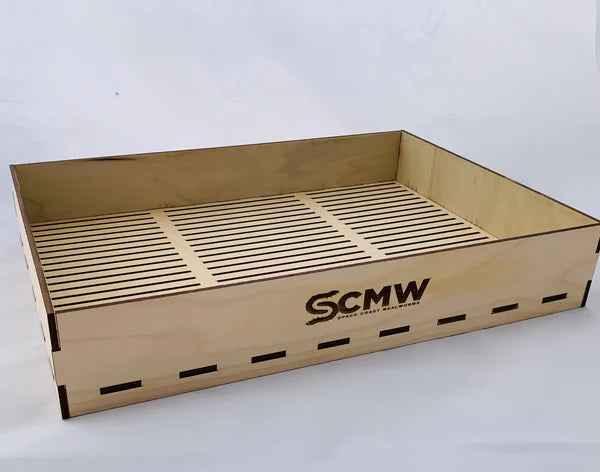
One-Stop Shop for mealworm farming tools. The only place in the world to purchase Mealworm Pupae Sifting Trays!
The facts
- Address
- Space Coast Mealworms, 980 Nevada Drive NE, PALM BAY FL 32907, United States Map
- Country
- United States
- Payment
- iDEAL
- Languages
- English
- Ships to
- Worldwide
- Delivery
- Shipped within 5-7 business days
- Shipping information
- Shipping page
What they sell
Web shop on Shopify: 30 products, $5–$55
Show 9 more categories
 Mealworm Mama T-Shirt$25–$27In stock
 Feed the Beast!$25–$27In stock
 Feed The Beast Tank Top$25–$27In stock
 Chicken Fight T-Shirt$25–$27In stock
 Awkward Teenager T-Shirt$25–$27In stock
 Mealworm Wrangler T-Shirt$25–$27In stock
 Dubia Roach Bucket Sifting Inserts$15–$70In stock
 Lasercut 2-Gallon Bucket$8–$30In stock
- 2-Gallon Bucket ACRYLIC Sifting Inserts$15–$70In stock
 Lasercut Library Book Suggestion Box$20–$35In stock
 THICK CLEAR Acrylic Round (11") Mealworm Pupae Sifting Tray$35In stock
 CLEAR Acrylic Round (11") Mealworm Pupae Sifting Tray$25In stock
12 of 30 products, read 21 h ago
12 of 30 products, prices $5–$55, as published by the shop (read from the shop 21 h ago; the shop last changed its products 28 November 2026; last change seen here 21 h ago). Prices and stock change; the shop’s website has the current ones.
About
SCMW has a new, updated website! Same amazing products, just better organized! Home of the ORIGINAL (and still most effective) Mealworm Pupae Sifter Space Coast Mealworms began in February 2017 by Scott Jost. He wanted a way to save money on mealworms for his small backyard chicken flock. Months later he had a thriving worm colony in his garage, with more worms than he ever imagined! He decided to sell to local chicken farmers and network with mealworm farmers around the country.
Frequently asked questions
Q1: What size container is best for beginners?
A: A shallow plastic tub of 2–5 gallons (approx. 6–10" deep) gives good surface area and control. Shallow > deep when possible.
Q2: How often should I change the bedding?
A: Replace or refresh bedding every 1–3 weeks depending on population size. For active colonies, plan to sift and refresh every week.
Q3: What should I feed mealworms?
A: Dry grain like wheat bran or oats as the base and separate moisture sources like carrots or potatoes. Small supplements (eggshells, brewer's yeast) are helpful.
Q4: How do I stop mites or pantry pests?
A: Keep bedding dry, replace old bedding, isolate and bake/freeze new feed (store sealed), and clean bins regularly. If a heavy infestation appears, move healthy larvae to new containers and start fresh bedding. You can also add split pea powder to bedding to help kill off and prevent mites.
Q5: When should I harvest larvae?
A: Harvest when they reach the size you need—commonly around 1" long. If selling or feeding to animals, pick uniformly large larvae for best results. If using a bucket sifter, any worms larger than the 1/12 mesh.
Q6: Can frass be used in the garden?
A: Yes—frass is a great soil amendment. Dry it and use sparingly in potting mixes or as a top-dress for houseplants.
Q7: How do I separate pupae efficiently?
A: Regular sifting using fine trays eliminates most manual picking. Designed sifter trays let mealworms fall through while retaining pupae for easy collection. Check out my Youtube videos for more info on this!
Q8: How warm should my room be?
A: Optimal temperatures are around 77–82 °F (25–28 °C). Below ~62 °F development slows substantially; very high temps can stress the colony.
Q9: Is it better to keep mixed-age bins or separate by life stage?
A: Both work. Mixed bins are easy, but separating by stage gives steady harvests and simpler management if you want reliable, frequent yields.
Q10: How often do beetles lay eggs?
A: Once beetles mature, they begin laying eggs within days and can continue for up to 12 weeks. A continuous production system relies on overlapping generations.
Q11: How many mealworms should I keep for a steady supply?
A: For a steady small supply, several stacked trays staggered by 2–3 weeks is ideal. Exact numbers depend on your feed needs—start small and scale with surface area.
Q12: Can I use household scraps to feed them?
A: Use fresh vegetable wedges (carrot, potato) for moisture. Avoid greasy, wet, or heavily seasoned scraps which cause mold and odors.
Features
Read from spacecoastmealworms.com. Last read 21 h ago. 9 of 11 key facts have a value; missing: opening hours, booking, order, menu or pricing link. Where these facts come from