Sterling Aviations
Online shop · Telluride, United States · aviationsterlings.com
Unclaimed · Not verified by owner

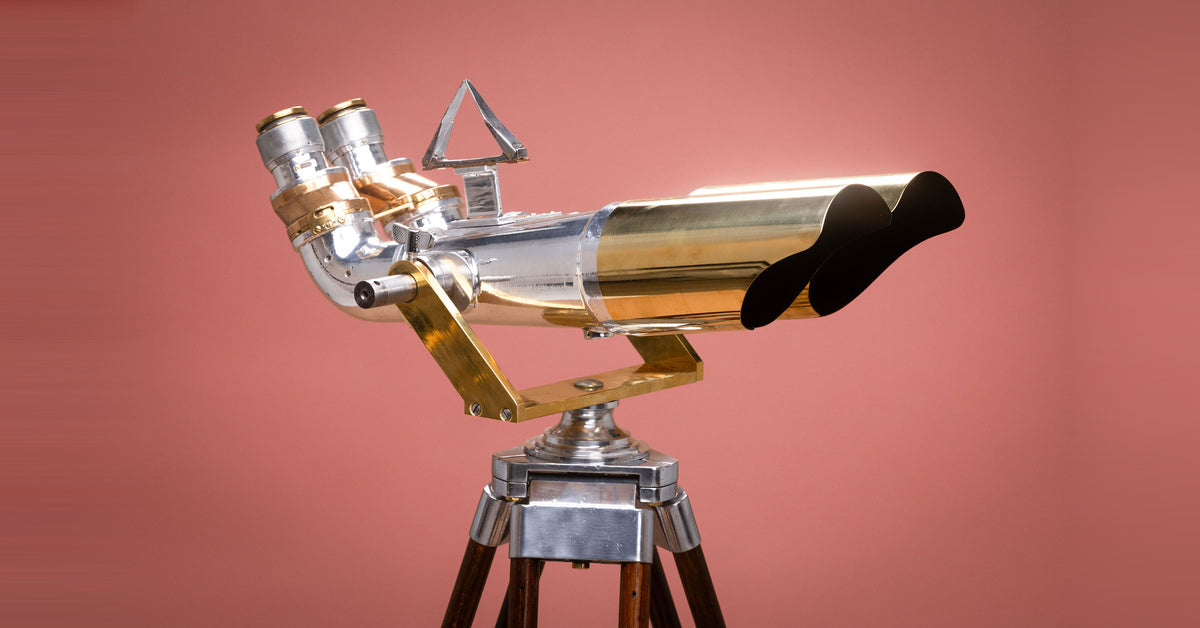
Authentic WWI and WWII military binoculars sourced and restored by hand. Original German and Japanese wartime optics with genuine historical provenance.
The facts
- Address
- 209 E Colorado Ave, Telluride, Colorado 81435 Map
- Country
- United States
- Phone
- +1 970-807-3313
- Payment
- Visa, American Express, PayPal, Apple Pay, Google Pay, Discover, iDEAL
- Languages
- English
- Ships to
- United States, Canada
- Delivery
- Delivery time 2 to 4 days
What they sell
Web shop on Shopify: 50 products, $99–$56,000
 WWII German Anti Aircraft Binoculars$15,000In stock
 WWII Cold War Binoculars, Great Optics$33,000In stock
 Toko 20 x 120 Binoculars$56,000In stock
 German Carl Zeiss Periscope Binoculars, 10 x 50, Deep Magnification, Cold War$25,000In stock
 WWII Toko 15 x 80 Binoculars$22,000In stock
 Joseph Schneider WWII Military 10 x 80 Binoculars$16,000In stock
 Emil Busch 10 x 80 Binoculars$18,000In stock
 WWII Toko 20 x 120 Binoculars$35,000In stock
 WWII Nikon Big Eye Binoculars: Imperial Japanese Navy.$9,900In stock
 Japanese Naval Binoculars Industrial WWII 20th Century Japan$9,500In stock
 Boeing 747 passenger seat covered to office chair$2,400In stock
 American Maritime Brass Deep Sea Divers Helmet (Mark V)$399In stock
12 of 50 products, read 33 h ago
12 of 50 products, prices $99–$56,000, as published by the shop (read from the shop 33 h ago; the shop last changed its products 26 November 2026; last change seen here 33 h ago). Prices and stock change; the shop’s website has the current ones.
About
Enter your email to save an additional 10% off on all products. Success! Use code EMAILREWARD at checkout. We've also sent the code to your email. Welcome to Sterling Aviations, where history takes flight inside the spaces you live and work in. Built from a love of aviation and an eye for design, we transform retired wartime parts into striking, one-of-a-kind furniture and statement pieces.
Prices
| WWII German Binoculars | $28,000 |
| Nikko 15x80 WWII Military Binoculars 1945 Japanese Antique with Tripod Stand | $22,000 |
Prices as shown on the website when it was last read; the business may have changed them since.
Frequently asked questions
Do you offer original German WWII binoculars and Japanese military binoculars?
Yes. Our collection regularly includes original German WWII binoculars and Japanese military binoculars sourced from historical collections. Availability varies due to the rarity of these wartime instruments, making each piece unique.
Are your WWII military binoculars authentic historical pieces or replicas?
Every binocular we offer is an authentic historical instrument sourced from military and private collections. We do not sell replicas or modern reproductions. Each piece retains its original wartime character, markings, and historical significance.
How are your vintage military binoculars restored and preserved?
Each binocular is carefully inspected, cleaned, and restored by hand while preserving its original character and historical integrity. The restoration process focuses on maintaining authenticity while ensuring the instrument can be appreciated for generations to come.
What provenance documents matter most for museum-grade wartime optics?
Bring-back papers signed by Allied servicemen provide the strongest provenance, especially when they tie a specific serial number to a capture location and date. Auction records from recognized military antiques houses establish legitimacy and documented ownership history. Unit markings on the instrument itself add historical context, especially when they can be connected to a specific vessel, battery, or observation role. Undocumented stories and verbal claims, however colorful, do not constitute provenance.Takeaway: Paper documentation, serial-linked records, and credible auction history…
How does professional restoration affect the value of tripod-mounted WWII observation binoculars?
Professional restoration that preserves original markings, restores optical performance, and stabilizes the instrument without erasing period character can enhance collector value for museum-grade pieces. The key is preservation of authenticity: serial numbers, maker codes, original finish where possible, and mechanical systems should remain intact. Amateur restoration, inappropriate repainting, over-polishing, or parts replacement diminishes value.Takeaway: Professional restoration can add value when it preserves authenticity, original components, and period character. Amateur work usually…
What markings distinguish authentic WWII Japanese naval binoculars from reproductions?
Authentic Imperial Navy instruments carry anchor stamps indicating military issue, along with Nikko or Toko maker markings that confirm wartime Japanese naval production. Serial numbers should show consistent period formatting and match the overall construction, finish, and marking style of the instrument. The quality of optical glass and mechanical precision in genuine pieces is often clear when compared to reproductions. JMSDF markings indicate postwar production for the Japanese Maritime Self-Defense Force.Takeaway: Look for Imperial Navy anchor stamps, period-correct Nikko or Toko maker…
How can you tell if large-format German military binoculars are wartime or postwar production?
Wartime pieces (late-1940 through 1945) carry three-letter maker codes, while pre-war production shows full manufacturer names, and postwar production typically shows later commercial markings or branding. Serial number ranges documented in reference works like Seeger’s Military Binoculars and Telescopes can pinpoint production periods more precisely. Coated optics, integrated filter systems, and specific service markings also help date large-format instruments.Takeaway: Cross-reference maker codes, serial numbers, service markings, and optical features to establish the production period…
Can antique military binoculars and WWII binoculars still be used today?
Many of our restored binoculars remain fully functional and can still be used for observation. However, they are also highly valued as historical collectibles, appreciated for their craftsmanship, engineering, and wartime heritage.
Why are WWII military binoculars valuable collectibles and investments?
WWII military binoculars are valued for their rarity, historical significance, and exceptional craftsmanship. Original wartime instruments become increasingly difficult to source, making authentic examples highly sought after by collectors, historians, and enthusiasts around the world.
What do maker codes like blc, dkl, cxn, and eug mean on WWII German 10x80 military binoculars?
These codes identify the manufacturer and show that the binoculars were marked under the wartime German coding system, phased in for optics from late 1940 through 1941, used to obscure production sources from Allied intelligence. blc indicates Carl Zeiss Jena, cxn indicates Emil Busch of Rathenow, dkl indicates Jos. Schneider & Co. (Schneider Kreuznach), and eug indicates Optische Präzisions-Werke (OPW) of Warschau. The presence of a code rather than a full maker name typically indicates wartime production.Takeaway: A three-letter maker code usually points to late-1940 or later wartime…
Features
Read from aviationsterlings.com. Last read 33 h ago. 9 of 11 key facts have a value; missing: opening hours, booking, order, menu or pricing link. Where these facts come from