
Canyonite
Shops & Retail in Tucson · Web shop on Shopify · canyonite.com
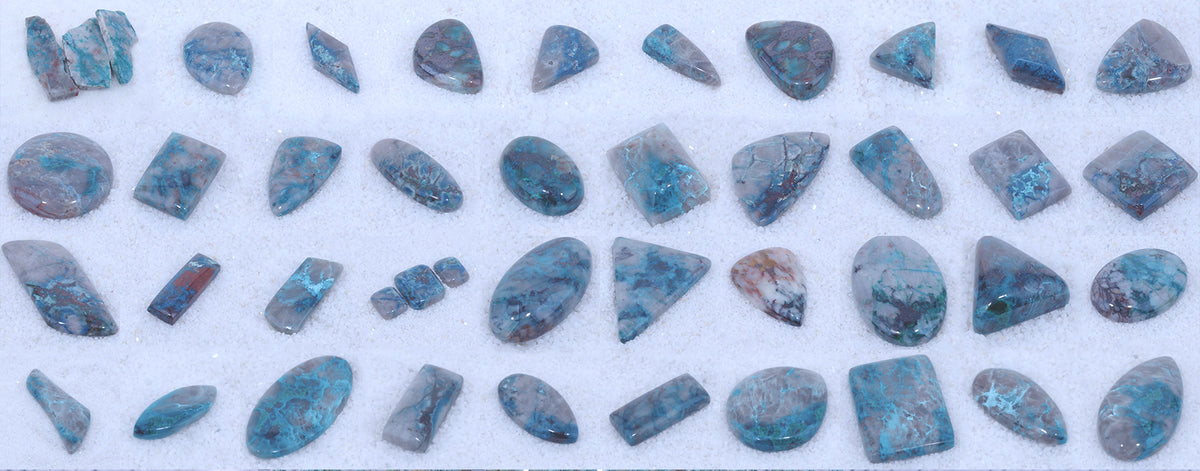
Canyonite™ offers rare gemstones born from copper-rich Arizona veins—vivid blues and teals that embody earth’s history and timeless beauty.
- Country
- United States
- Opening hours
- Hours: Mon–Fri, 9:00am–5:00pm CSTDetails
- Payment
- iDEAL
- Languages
- English
- Ships to
- Worldwide (29 countries)
- Shipping information
- Shipping page
What they sell
Web shop on Shopify: 252 products, $32.95–$13,912.95
 Sterling Silver 6.65ct Papagoite, Djurleite, Malachite Canyonite Necklace$231.95In stock
 Sterling Silver 2.95ct Chrysocolla Canyonite Necklace$231.95In stock
 Sterling Silver 6.50ct Papagoite, Ajoite, Chrysocolla Canyonite Necklace$231.95In stock
 Sterling Silver 11.55ct Canyonite Pendant$231.95In stock
 Sterling Silver 6.55ct Papagoite, Shattuckite, Malacheite Canyonite Necklace$231.95In stock
 Sterling Silver 21.45ct Papagoite, Ajoite, Malachite Pendant$231.95In stock
 Sterling Silver 2.85ct Canyonite Chrysocolla, Cuprite Necklace$231.95In stock
 Sterling Silver 5.85ct Canyonite Papagoite and Ajoite Necklace$231.95In stock
 Sterling Silver 14.80ct Papagoite, Ajoite, Chrysocolla, Malachite Canyonite Pendant$208.95In stock
 Sterling Silver 12.25ct Papagoite, Ajoite, Chrysocolla Canyonite Pendant$208.95In stock
 Ultra Rare 14k Gold, 3.3ct Natural Diamond Canyonite Papagoite Gem Silica Necklace$1,113.95In stock
 Sterling Silver 13.45ct Malachite, Djurleite, Cuprite Canyonite Pendant$231.95In stock
12 of 252 products, prices $32.95–$13,912.95, as published by the shop (read from the shop 2 h ago; the shop last changed its products 25 November 2026; last change seen here 2 h ago). Prices and stock change; the shop’s website has the current ones.
Opening hours
| Hours: Mon–Fri, 9:00am–5:00pm CST |
Hours as written on the website.
About
You're moving through the rugged landscapes of southern Arizona — sunlight reflecting off weathered rock, dry air carrying the scent of desert vegetation, and mineralized outcrops revealing subtle traces of copper-rich history. Among these textures, occasional flashes of color appear: blues, teals, and greens emerging from pale silica and fractured stone. Closer inspection reveals something unusual. Rather than surface coatings, the color exists within translucent chalcedony itself — mineral textures suspended in silica, preserved as though the formation process paused mid-development.
Frequently asked questions
Shop
Freeform GemstonesCalibrated GemstonesCollector SpecimensMuseum PiecesSlabsFine JewelryBrowse All Canyonite
Media
BlogMedia & Press
About
The Science of CanyoniteAbout Canyonite LabsPartners
What is Canyonite?
Canyonite is a Southern Arizona silica-hosted mineral assemblage containing variable secondary copper minerals within chalcedony, druzy silica and related siliceous material. This naturally occurring assemblage is found in select Southern Arizona localities and can be fashioned into gemstones and mineral specimens. The silica host provides structural integrity and durability for lapidary applications.
What is Papagoite?
Papagoite is an exceptionally rare blue copper-bearing silicate mineral with the chemical formula CaCuAlSi₂O₆(OH)₃. It was first described from Ajo, Arizona, and remains one of the rarest copper minerals known to science. For comprehensive information on Papagoite including its chemistry, structure, discovery, localities, formation, properties, Raman spectroscopy, identification and gemology, see our complete Papagoite mineral reference.
Is Papagoite found in Canyonite?
Yes. Papagoite has been analytically identified in select representative Canyonite material from Southern Arizona. However, Canyonite is a heterogeneous mineral assemblage, and the presence of Papagoite should not be assumed in every piece. The assemblage varies in composition across specimens, and analytical confirmation is required to verify the presence of specific mineral phases.
How do you know Papagoite is present?
Color alone is unreliable because Ajoite, Shattuckite, Chrysocolla-related material and other copper minerals can appear visually similar. Raman spectroscopy analyzes characteristic mineral vibrational signatures, providing definitive identification of mineral phases. This non-destructive analytical technique allows us to distinguish Papagoite from other blue copper minerals based on its unique molecular structure. Learn more about our analytical methods in our Canyonite mineral research.
Is Canyonite the same as Papagoite?
No. Papagoite is a formal mineral species with a defined chemical formula and crystal structure. Canyonite is the broader Southern Arizona silica-hosted mineral assemblage that can contain Papagoite along with other copper-bearing minerals. Select Canyonite specimens contain analytically confirmed Papagoite, but the two terms are not interchangeable. Canyonite represents the host assemblage, while Papagoite is one of several possible mineral phases within it.
What other minerals occur in Canyonite?
Canyonite can contain Papagoite, Ajoite, Shattuckite, Chrysocolla-related material, Brochantite and Djurleite, among other secondary copper minerals hosted in chalcedony and druzy silica. The specific mineral assemblage varies by specimen and locality. Not every specimen contains every mineral. The heterogeneous nature of Canyonite means that each piece represents a unique combination of mineral phases formed under specific geological conditions.
What is the difference between Papagoite, Ajoite, Shattuckite and Chrysocolla?
These are distinct mineral species with different chemical formulas and crystal structures. They can overlap visually in blue, turquoise and green colors, making visual identification unreliable. Color alone is not definitive identification. Analytical techniques such as Raman spectroscopy are required to distinguish between these copper-bearing minerals. Each has unique vibrational signatures that allow for accurate identification. Learn more about Papagoite and its distinguishing characteristics.
Can Canyonite be cut into gemstones and jewelry?
Yes. Suitable naturally silicified Canyonite can be polished into cabochons, freeforms, matched pairs and jewelry. The silica host contributes to durability and workability for lapidary applications. However, it is important to understand that a finished gemstone represents the entire mineral assemblage, not pure Papagoite or any single mineral phase. Explore our selection of Canyonite gemstones to see examples of finished material.
Is Canyonite stabilized or treated?
Canyonite sold by Canyonite.com is presented as natural, untreated and unstabilized. We do not use resin or polymer stabilization to create structural integrity. The natural silica host provides sufficient durability for lapidary work without artificial enhancement. This commitment to natural material ensures that each piece represents the authentic geological formation as it occurs in nature.
Where can I learn more about Papagoite?
Visit our comprehensive Papagoite reference covering chemistry, structure, discovery, localities, formation, properties, Raman spectroscopy, identification and gemology. This resource provides detailed scientific information about this exceptionally rare copper-bearing silicate mineral, including analytical methods, geological context and distinguishing characteristics that separate Papagoite from other blue copper minerals.
Product type
Gemstones (147)
Tier
Canyonite Reserve (10) Canyonite Select (6) Canyonite Sky (46) Canyonite Sovereign (5)
Stone shape
Other (27) Oval (40) Rectangular (25) Round (3) Square (12) Teardrop (26) Triangular (28)
Grade
CS2 (5) CS3 (62) CS4 (11) CS5 (69)