
Emperor Marble
Shops & Retail in London · Web shop on Shopify · emperormarble.co.uk
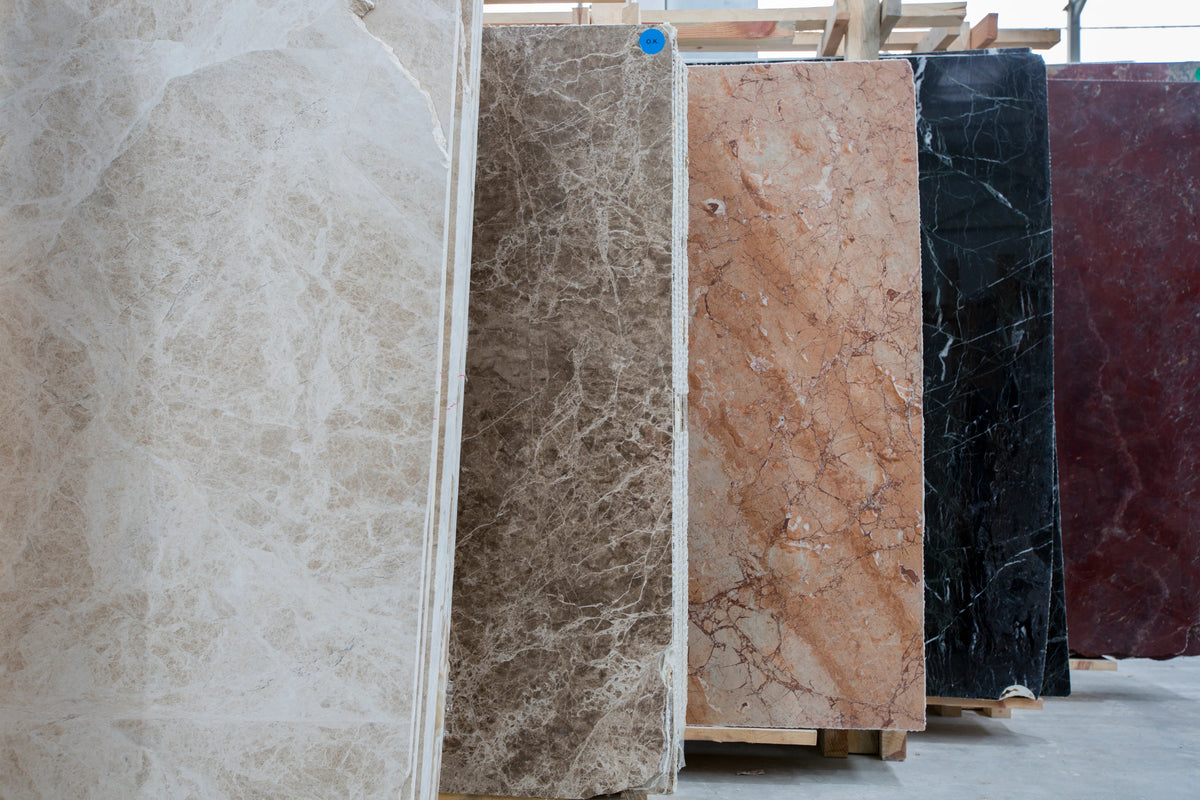
London-based international natural stone company: wholesale natural stone supplier and distributor for bulk and project buyers across the UK and internationally. Marble, onyx, travertine and limestone slabs and large-format marble tiles by the block, bundle or container, with a live online slab inve
- Address
- Serves United Kingdom, Ireland, Europe, Middle East, United States, South Africa
- Country
- United Kingdom
- Phone
- +44 7542 903521
- Languages
- English
- Service area
- United Kingdom, Ireland, Europe, Middle East, United States, South Africa
- Ships to
- United Kingdom, Ireland, Europe
- Shipping information
- Shipping page
What they sell
Web shop on Shopify: 474 products
Show 18 more categories
 Torsion GreyIn stock
 Sonic CherryIn stock
 Mangle BlackIn stock
 Rainbow Onyx Natural Stone SlabsOut of stock
 White Emperador Marble SlabsOut of stock
 White Rainbow Marble SlabsOut of stock
 Light Green Onyx Extra SlabsOut of stock
 Light Green Onyx Vein Cut SlabsOut of stock
 Rosso LevantoOut of stock
 Opal WhiteOut of stock
 Moonlight Grey SlabsOut of stock
 Marmara Equator Marble Slabs - S(087)Out of stock
12 of 474 products, as published by the shop (read from the shop 2 days ago; the shop last changed its products 23 November 2026; last change seen here 2 days ago). Prices are being read again; the shop’s website has them.
About
Emperor Marble is a wholesale natural stone supplier and distributor for bulk and project buyers. We supply marble, onyx, travertine and limestone slabs and large-format marble tiles by the block, by the bundle or by the container, and we source quartzite and any stone we do not hold to order. Emperor Marble Limited is a London-based international natural stone company. We serve the whole of the UK and have customers internationally, including Ireland, Europe and the Middle East, with projects delivered from Cape Town to Switzerland. Our slab inventory is published live.
Prices
| 4 Free Samples | £7.42 |
| One Pallet | £300.00 |
Prices as shown on the website when it was last read; the business may have changed them since.
Frequently asked questions
Do you have marble slabs in ready stock?
Yes, and you can check it online. Our slab inventory is published live: each slab page lists the blocks available now, with block code, area in m², thickness, average slab size and available bundles, and shows whether a stone is in stock or made to source.
Can I order slabs from the same block?
Yes. Slabs are listed by block, so slabs from the same block can be requested together.
Do you supply wholesale and in bulk?
Yes. We supply by the block, by the bundle or by the container, to fabricators, contractors, developers, architects, interior designers and trade buyers.
Can you source a stone that is not in stock?
Yes. We source marble, onyx and quartzite to order, bought by the block and cut to slabs, or supplied as finished slabs and tiles. We confirm the quarry, block, slab stock or production option before you commit.
Where do you deliver?
We are based in London and serve the whole of the UK. We deliver by pallet across the UK, Ireland and the EU, and ship full containers to Europe, the USA and other markets.
How do I order?
Use "Request availability" on the slab page, or email enquiries@emperormarble.co.uk with quantities in m² or slabs. We reply with a written quotation; prices, slab dimensions and lead times are confirmed per project.
Navigate
Search Contact Gallery Blog About Us Our Mission
Policies
Privacy Policy Return Policy Terms & Conditions Shipping & Returns
How does a marble slab go from mountain to kitchen?
It starts at the quarry face, where a raw block — typically 2.5m × 1.5m × 1.5m, weighing 15–20 tonnes — is cut free using diamond wire saws. The block is transported to a processing plant where a gang saw (a frame holding dozens of parallel diamond blades) slices it into slabs, usually 20mm or 30mm thick. Each slab is then polished or honed on a calibrating line, inspected for flaws, and bundled in sequence so that consecutive slabs from the same block can be bookmatched. The entire journey from quarry extraction to finished slab takes 4–8 weeks depending on the stone and the quarry's location
What is bookmatching, and why does it matter?
When a gang saw slices through a block, each consecutive slab is a near-mirror image of the one before it — like opening a book. Laying two consecutive slabs side by side with one flipped creates a symmetrical veining pattern across the pair. This is bookmatching. It transforms a kitchen island, a feature wall, or a bathroom surround into a single composed image rather than a random arrangement of stone. Bookmatching only works with sequential slabs from the same block, which is why slab selection at the yard — seeing the actual stone before committing — matters far more than choosing from a s
What slab thicknesses are available, and which should I choose?
Standard thicknesses are 20mm and 30mm. For worktops and kitchen islands, 20mm is the most common — it is lighter, easier to handle, and structurally sufficient for any countertop span when properly supported. 30mm is used where a thicker edge profile is desired for visual weight, or for unsupported spans exceeding 600mm (such as cantilevered breakfast bars). Feature walls and cladding can use 20mm or even thinner veneered panels depending on the application. We advise on thickness based on the specific project — there is no universal right answer.
How do I choose the right slab for my project?
Start with the application (worktop, floor, wall, fireplace), then consider the room's lighting and existing palette. Veining direction matters — vertical veining on a feature wall creates height, horizontal veining creates width. For worktops, think about the edge profile and whether you want bookmatched or running pattern. We recommend selecting from actual slab photographs or visiting a yard to see the stone in person, because every slab is unique. Send us a quote request describing your project and we will shortlist slabs, send photographs, and walk you through the options before you commi
What is the difference between polished, honed, and brushed finishes?
Polished is a high-gloss mirror finish that maximises colour depth and vein contrast — the surface reflects light directly. Honed is a smooth matte finish with no reflection — it softens the veining slightly and makes surface etching virtually invisible, which is why it is the most practical choice for kitchen worktops. Brushed (or leathered) has a textured, slightly rough surface that adds a tactile dimension and hides wear exceptionally well — popular for rustic or industrial interiors. All three finishes are applied at the processing stage, not after installation. The same slab can look lik